
Last verified: April 2026
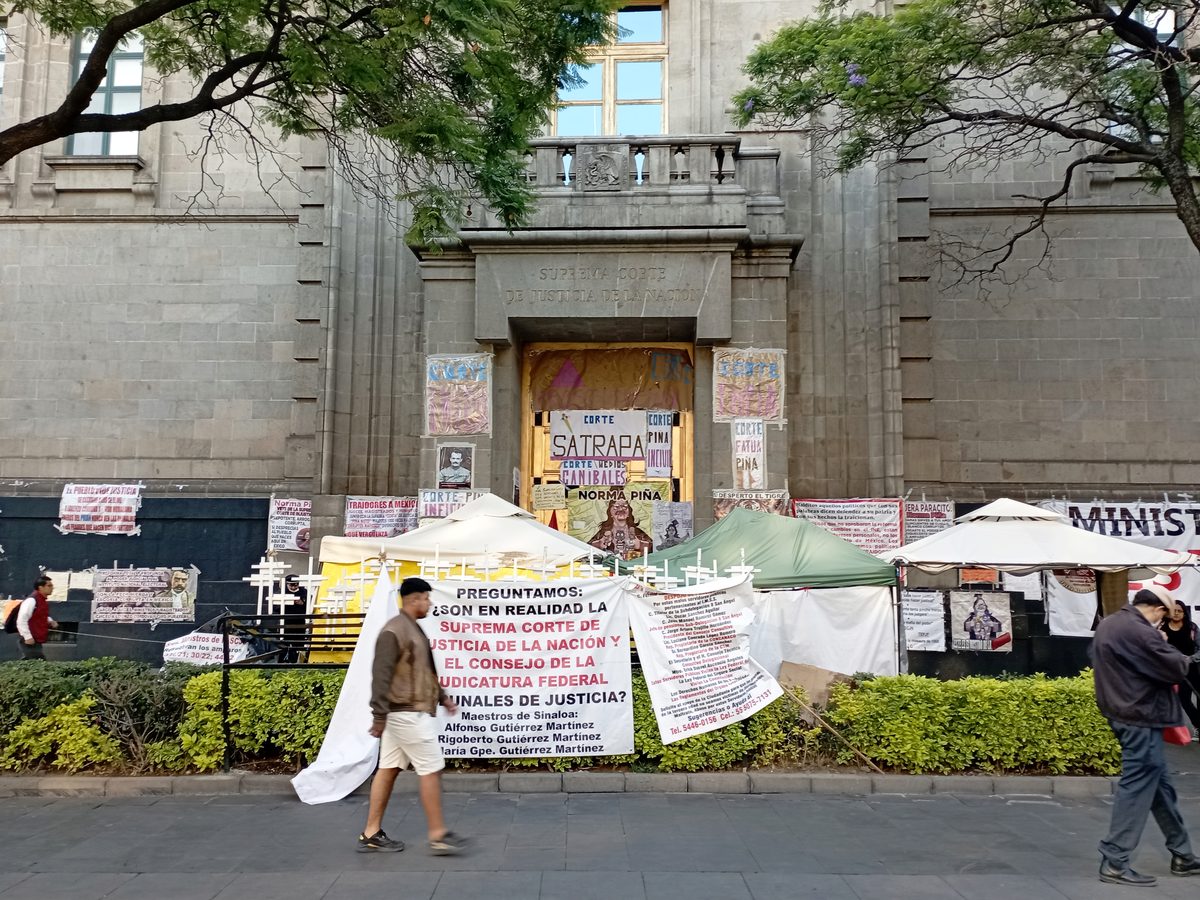
Mexico's Constitutional Reform — Driven by the Bench, Not Congress
Mexican cannabis reform is unusual globally: it is constitutional jurisprudence, not statute. Where Canada legalized through the Cannabis Act, Uruguay through Law 19.172, and U.S. states through ballot initiatives, Mexico arrived at constitutional protection for personal cannabis use through a series of decisions by the Suprema Corte de Justicia de la Nación (SCJN) — over the explicit inertia of a Congress that has now missed every legislative deadline.
This is also why the right is unusually durable. The constitutional holding cannot be easily repealed; it can only be legislated around.
Article 4: The Doctrinal Anchor
The legal architecture begins with Article 4 of the Constitución Política de los Estados Unidos Mexicanos, which guarantees the derecho al libre desarrollo de la personalidad — the right to the free development of personality. Although Article 4 is best known for protections of family, health, housing, and a healthy environment, the SCJN has read into it (together with Articles 1 and 14) a sphere of personal autonomy that the State cannot invade absent a proportional, rational justification.
Recreational cannabis use, the Court concluded, falls within that protected sphere when conducted by adults in private and without affecting third parties.
The Foundational Case: Amparo en Revisión 237/2014 (November 2015)
The story begins with Amparo en Revisión 237/2014, decided by the First Chamber of the SCJN on November 4, 2015. The plaintiffs were four members of SMART (Sociedad Mexicana de Autoconsumo Responsable y Tolerante), a civil-society group founded specifically to litigate the cannabis prohibition. They had requested authorization from COFEPRIS to grow, transport, and consume cannabis personally; COFEPRIS denied; they sought constitutional protection (an amparo).
The First Chamber, in a 4–1 decision authored by Ministro Arturo Zaldívar Lelo de Larrea, held that Articles 235, 237, 245(I), 247, and 248 of the Ley General de Salud, as they prohibited personal recreational consumption, were unconstitutional. They constituted a disproportionate restriction on Article 4. Joining: Ministros Pardo Rebolledo, Gutiérrez Ortiz Mena, and Sánchez Cordero. Zaldívar's opinion is now the doctrinal anchor of Mexican cannabis jurisprudence.
Crucially, the decision applied only to the four plaintiffs. To extend it, others had to file their own amparos.
Building Toward Jurisprudencia Firme
For Mexican constitutional review to bind beyond the parties to a single case, the Court must issue five consistent decisions on the same point — creating jurisprudencia firme. Between 2015 and 2018, the SCJN's First and Second Chambers issued the necessary follow-on rulings, including amparos 1115/2017 and 623/2017, decided in the First Chamber, and 547/2018 shortly after — each holding that the LGS prohibition on adult recreational use is unconstitutional.
By early 2018, jurisprudencia firme on the unconstitutionality of recreational prohibition existed. Under Article 107 of the Constitution and the Ley de Amparo, the Court was empowered to issue a declaratoria general de inconstitucionalidad — a general declaration with effect against everyone — but only after notifying Congress and giving it 90 days to legislate. Congress did not.
June 28, 2021 — Declaratoria General de Inconstitucionalidad 1/2018
After repeated extensions (Congress requested and received deadline extensions in 2019, 2020, and early 2021), the Pleno of the SCJN issued, on June 28, 2021, the long-awaited Declaratoria General de Inconstitucionalidad 1/2018. The vote was 8 in favor, 3 against.
The declaratoria struck down (as applied to recreational adult personal use) the relevant prohibitive language in Articles 235 (last paragraph), 237, 245 (frac. I), 247 (last paragraph), and 248 of the Ley General de Salud. The Court ordered COFEPRIS to issue authorizations to adults who request them — for the cultivation, possession, transport, and consumption of cannabis for personal recreational use — excluding sale, supply to third parties, and consumption in front of minors or non-consenting adults.
Justices in the majority included Arturo Zaldívar Lelo de Larrea (then Court president), Juan Luis González Alcántara Carrancá, Alfredo Gutiérrez Ortiz Mena, Norma Lucía Piña Hernández, Ana Margarita Ríos Farjat, Yasmín Esquivel Mossa, Javier Laynez Potisek, and Luis María Aguilar Morales. Dissenters included Jorge Mario Pardo Rebolledo and Alberto Pérez Dayán.
Timeline of Mexican Cannabis Jurisprudence
Amparo en Revisión 237/2014
SCJN First Chamber, 4–1, holds that LGS Articles 235, 237, 245(I), 247, 248 are unconstitutional as applied to personal recreational use. Authored by Ministro Arturo Zaldívar.
Medical reform under Peña Nieto
Ley General de Salud amended to permit medical cannabis. Products under 1% THC moved out of Group I. Reglamento expected within 180 days — actually published Jan 2021.
Five consistent rulings reach <em>jurisprudencia firme</em>
Amparos 1115/2017, 623/2017, and 547/2018 cement the doctrine. Court empowered to issue a declaratoria general against everyone, after notifying Congress.
Congress misses three deadlines
SCJN grants Congress successive extensions to legislate. None produces a final-passage law.
Senate passes Ley Federal para la Regulación del Cannabis
82–18–7 vote. Bill envisions a new institute, five license categories, 28 g possession, 6 plants per person. Chamber of Deputies receives it — never votes.
Medical reglamento published
Reglamento de la Ley General de Salud en Materia de Control Sanitario para la Producción, Investigación y Uso Medicinal de la Cannabis y sus Derivados Farmacológicos. Pharmacy-only; flower excluded.
Declaratoria General de Inconstitucionalidad 1/2018
Pleno of the SCJN votes 8–3. Strikes down LGS prohibitions on personal recreational use. Orders COFEPRIS to issue individual amparo authorizations.
Sheinbaum administration; no federal recreational bill
Reform advocates lobby; legislature inert. The constitutional right exists; the legal market does not.
What the Ruling Did — and Did Not — Do
- Made it unconstitutional for COFEPRIS to deny adult recreational amparo applications.
- Ordered COFEPRIS to issue individual authorizations for cultivation, possession, and consumption of cannabis for personal recreational use.
- Established that adults who file an amparo and win are entitled to a permit.
- Authorize commerce, sale, supply, distribution, or any market.
- Repeal the criminal provisions of the Código Penal Federal.
- Create a regulated market or address public-health/marketing rules.
- Protect amparo holders from municipal public-order codes (smoking in public, intoxication, etc.).
Court vs. Congress — The Standoff
The constitutional theory is settled. The political theory is not. Without legislation defining a regulated market, the SCJN's holding produces an absurd architecture: a right to grow but no place to legally obtain seed; a right to possess but no place to legally buy. The Court has effectively done what it can within the limits of judicial power. The rest is up to the legislature — and the legislature has not delivered.
The 2021 Declaratoria does not create a market. It removes a constitutional barrier to personal use for those who hold an amparo permit. Sale of cannabis remains a federal crime. No dispensary in Mexico operates legally.
For Mexicans Considering an Amparo
If you are a Mexican adult considering pursuing personal-use authorization, see our step-by-step guide to the amparo process. Civil-society organizations including SMART, México Unido Contra la Delincuencia (MUCD), and specialist law firms facilitate applications.
Official Sources & Further Reading
- SCJN Sistema de Consulta de Tesis y Jurisprudencia — full text of all amparos
- Suprema Corte de Justicia de la Nación
- México Unido Contra la Delincuencia (MUCD) — policy research and litigation support
- Ley General de Salud (full text)
For in-depth cannabis education, dosing guides, safety information, and research summaries, visit our partner site TryCannabis.org
Related on this site: Cannabis DUI in Mexico, Is Cannabis Legal in Mexico? The Cons..., Mexico Cannabis Penalties.