Last verified: April 2026
The Caribbean Coast Reality
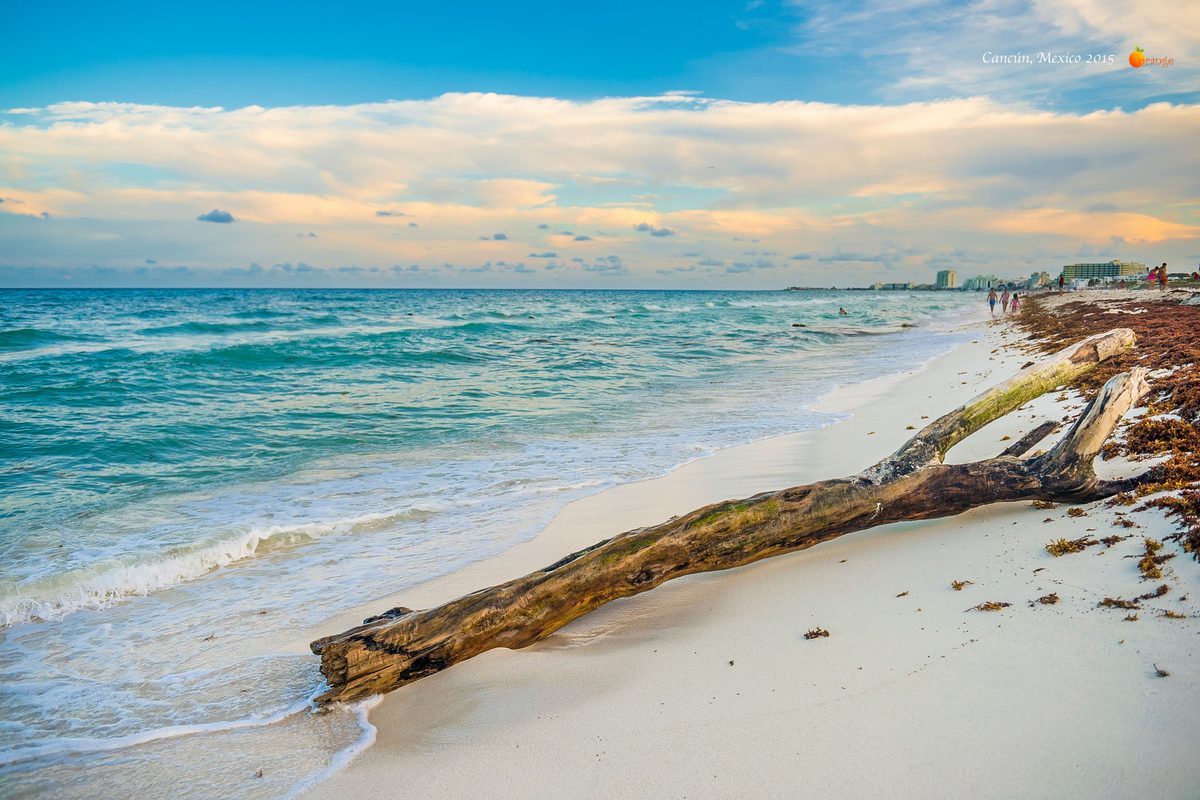
The Caribbean coast — Cancún, Playa del Carmen, Tulum, Cozumel, Bacalar — receives the largest U.S. and Canadian tourist volume in Mexico. Cannabis circulates extensively in the bar/club/beach economy. None of it is legal. Cannabis sale is illegal under the Código Penal Federal everywhere in Mexico, including Quintana Roo's tourist corridor.
Cancún
Hotel Zone (Zona Hotelera)
Hotel-zone policing in Cancún is more aggressive than common discourse suggests, especially around clubs (Mandala, Coco Bongo, Palazzo, The City) and beach sales. Tourist-targeted enforcement combines:
- Resort security reporting incidents to municipal police.
- Plainclothes municipal patrols on hotel-zone beaches and Boulevard Kukulcán.
- Club-entrance pat-downs that confiscate cannabis and vape pens.
- Beach-vendor sales as documented enforcement-and-extortion setups.
Downtown Cancún (Centro)
Quieter than the hotel zone for cannabis enforcement; Avenida Tulum and Mercado 28 see lighter targeting. Hotels in Centro are smaller, less corporate, and more variable in policy.
Playa del Carmen
5th Avenue (Quinta Avenida) is the heavily patrolled tourist corridor. Visible joints and dab pens routinely produce stops. Beach restaurants and bars in the Mamita's / Coralina / Inti area see periodic municipal sweeps. The areas behind 5th Avenue (Calle 4–10) toward the residential zones see lighter enforcement.
Tulum
Tulum's wellness/yoga/festival scene has a visible cannabis-adjacent culture, but Tulum municipal police have, in recent years, conducted high-profile cannabis stops on tourists, often with mordida-extraction overtones. Tulum's reputation as a cannabis-friendly haven is significantly outdated.
- Tulum strip (beach hotels) — heavy enforcement; resort-zone targeting.
- Tulum pueblo — lighter, but variable.
- Sian Ka'an / off-grid eco-camps — lightest enforcement; remote.
- Festival / event circuits (Zamna, Day Zero) — special-event policing varies.
Cozumel
Cozumel — primarily a cruise port — is the highest-risk location to be detained, because cruise re-boarding requires return through U.S. CBP, which compounds federal exposure. Local vendors actively market to brief-visit cruise visitors. Quintana Roo enforcement has become more drug-aware in tourist-zone areas. See cruise-port trap.
Bacalar
Bacalar — emerging eco-tourism on the Bacalar Lagoon — is quieter than Tulum. Cannabis culture exists discreetly in the boutique-hotel and lake-side restaurant scene. Light municipal enforcement; the Quintana Roo state-police presence is less than on the hotel-corridor.
Holbox
The carless island north of the Yucatán Peninsula has a bohemian beach-yoga atmosphere. Cannabis culture is more visible than on the hotel corridor but enforcement is unpredictable — Holbox's small police presence can mean either tolerance or unexpected attention.
Resort Policies in Quintana Roo
The major all-inclusive chains in Cancún, Riviera Maya, and Tulum — RIU, Iberostar, Palace, AMResorts (Secrets, Dreams), Hyatt Ziva/Zilara, Karisma (El Dorado), Bahia Principe, Hard Rock, Velas — all formally prohibit cannabis. Practical posture varies. See resort policies.
The Beach-Vendor Trap
Beach-vendor cannabis sales in the Cancún hotel zone, Playa del Carmen, and Tulum are a documented enforcement-and-extortion setup rather than a casual market:
- Vendors are sometimes coordinated with corrupt municipal police; the buyer is the target.
- Common sequence: friendly approach, sale, immediate police "encounter," mordida demand.
- Outcome ranges from US$200–US$500 paid + lost product, to formal detention if you refuse.
- Vape-pen "samples" are part of the same setup.
Tulum Festival Caution
Tulum's festival circuit (Zamna, Day Zero, BPM-era events) has historically had a relaxed cannabis posture, but post-2022 incidents — including high-profile festival closures and arrests — have shifted enforcement. Drug-detection at event entrances is increasingly common. ReverdeSer Colectivo provides harm-reduction services at some events.
Quintana Roo Politics
Quintana Roo's gubernatorial administrations have alternated between PRI, PAN, and PVEM affiliations; municipal politics in Benito Juárez (Cancún), Solidaridad (Playa del Carmen), and Tulum vary. None has championed cannabis reform. The state benefits enormously from tourism revenue and tends to prioritize tourist-zone "safety and order" optics.
What Tourists Should Do
- Don't buy from beach vendors. Period.
- Don't carry cannabis through Cancún International Airport (CUN). Drug-detection screening is active.
- If at a cruise port (Cozumel, Costa Maya), don't buy cannabis or hemp products. CBP exposure on return.
- If at a resort, treat tolerance as variable. Discreet private-room consumption is the lowest-risk option if you choose to risk it.
- Avoid hotel-zone visible consumption — Cancún Boulevard Kukulcán, Playa del Carmen 5th Avenue, Tulum strip.
- Don't drive impaired — Highway 307 (the Cancún-Tulum corridor) sees Federal Police checkpoints.
Wellness-Tourism Adjacency
Tulum's wellness scene markets cannabis-adjacent products (hemp-seed wellness oils, CBD topicals, hemp-fiber goods) at boutique stores and yoga-retreat shops. These products are mostly cosmetic-channel and legal in Mexico. See buying CBD legally. Don't bring them home — see cross-border CBD warning.
For in-depth cannabis education, dosing guides, safety information, and research summaries, visit our partner site TryCannabis.org