
Last verified: April 2026
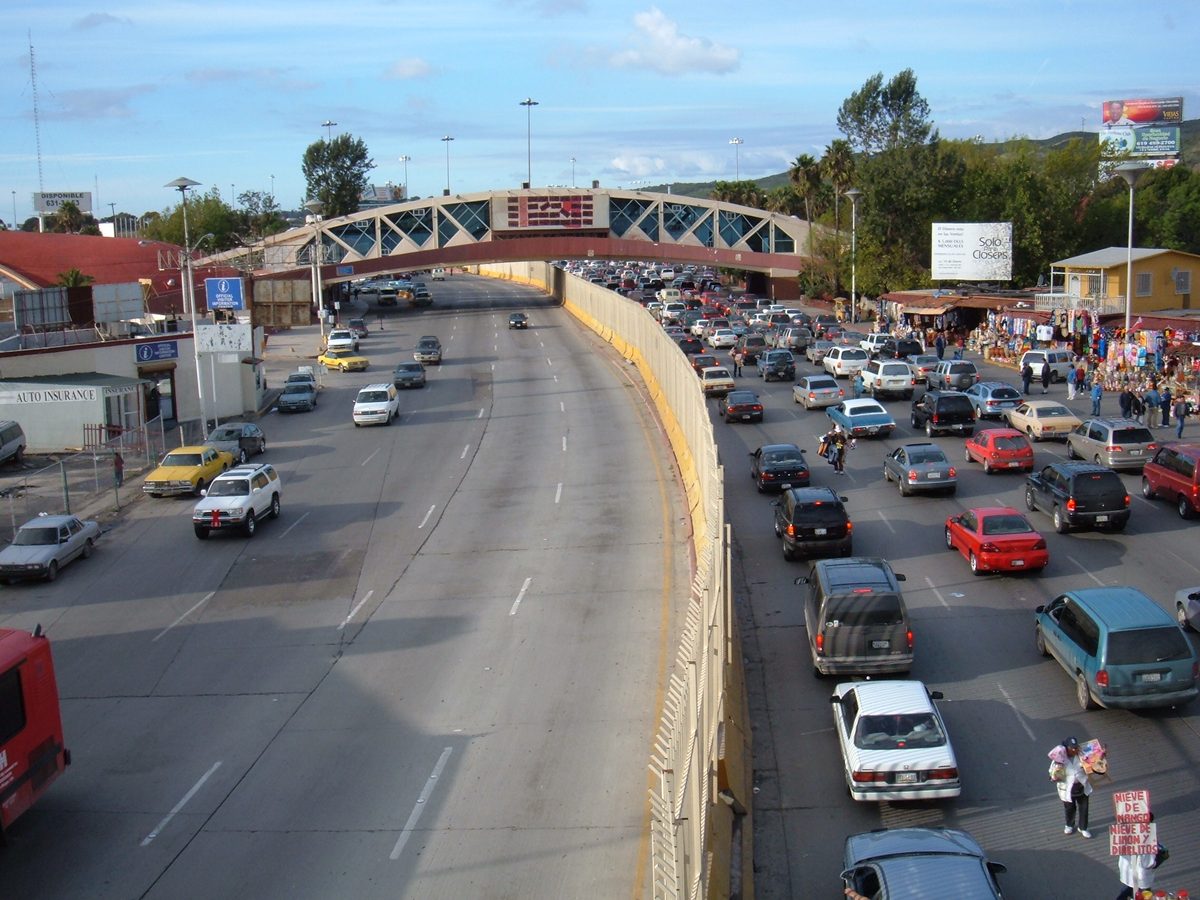
Cannabis remains a Schedule I controlled substance under U.S. federal law, regardless of state law, and crossing the U.S.–Mexico border with any amount of cannabis is a federal felony under the Controlled Substances Act and the Tariff Act. There is no "state legal" exemption. CBP regularly catches crossings with cannabis (and even hemp/CBD products with detectable THC) and refers them for federal prosecution or denies entry.
Why the Border Is Different from Anywhere Else
The U.S.–Mexico border is the most legally treacherous moment for any cannabis-carrying traveler in the Western Hemisphere. Three layers of law apply simultaneously:
- U.S. federal law — Schedule I; CBP enforces.
- U.S. state law — relevant only if you stay on the U.S. side of the line; irrelevant the moment CBP inspects.
- Mexican federal law — Ley General de Salud, Código Penal Federal, Ley Aduanera; aduana and Guardia Nacional enforce.
The 3,145-km Border
Mexico shares a 3,145-km border with the United States. The U.S. side, as of April 2026:
- California — adult-use legal since 2018 (Prop 64, 2016).
- Arizona — adult-use legal since 2021 (Prop 207, 2020). A 2026 ballot repeal effort is under review.
- New Mexico — adult-use legal since April 2022 (Cannabis Regulation Act, 2021).
- Texas — prohibition state with a narrow, low-THC compassionate-use medical program; no rec.
This means Mexican residents living along most of the border can drive across into a fully legal-rec U.S. state — and many do. The crossing back is the trap.
The Major Crossings
| Crossing (MX / US side) | State Pair | US Side Cannabis Status |
|---|---|---|
| Tijuana / San Diego (San Ysidro & Otay Mesa) | Baja California / California | Adult-use legal (since 2018) |
| Mexicali / Calexico | Baja California / California | Adult-use legal |
| Nogales, Son. / Nogales, AZ | Sonora / Arizona | Adult-use legal (since 2021); 2026 repeal under review |
| Ciudad Juárez / El Paso | Chihuahua / Texas | Prohibition; low-THC medical only |
| Reynosa / McAllen | Tamaulipas / Texas | Prohibition |
| Matamoros / Brownsville | Tamaulipas / Texas | Prohibition |
⚠️ U.S. side state legality is irrelevant at the border — cannabis remains Schedule I under U.S. federal law. Crossing in either direction with any amount is a federal felony.
Northbound (Entering the U.S.) — CBP Enforces Federal Law
U.S. Customs and Border Protection (CBP) enforces federal law at all ports of entry. Bringing cannabis into the U.S. — even from California to California — is a federal felony under:
- Controlled Substances Act — possession of Schedule I (21 U.S.C. § 844, § 841).
- Tariff Act — failure to declare a controlled substance (19 U.S.C. § 1497).
- Smuggling statute (18 U.S.C. § 545) — for organized importation.
Penalties range from civil seizure (smaller quantities, first offense, possible administrative resolution) to felony prosecution and federal prison. CBP consequences include:
- Inadmissibility for non-citizens — including green card holders. A cannabis admission can result in lifetime inadmissibility under INA § 212(a)(2)(A)(i)(II).
- Trusted Traveler Program revocation — Global Entry, NEXUS, SENTRI revoked.
- Future entry difficulty — secondary inspection on every subsequent crossing.
Southbound (Entering Mexico) — Aduana & Guardia Nacional
Bringing cannabis into Mexico violates the Ley Aduanera and the Ley General de Salud / Código Penal Federal. Quantity-based escalation applies (5 g threshold; over 5 g is narcomenudeo or higher). Mexican enforcement:
- Aduana (customs, SAT) — primary inspection at land crossings, airports, sea ports.
- Guardia Nacional — secondary inspection and highway checkpoints near the border.
- State and municipal police — local enforcement for any subsequent stop.
The Asymmetric Reality
CBP regularly catches crossings with cannabis (and even hemp/CBD products with detectable THC) and refers them for federal prosecution or denies entry. Mexican aduana more commonly seizes, fines administratively, or releases low-quantity travelers — but criminal prosecution is always possible.
Asymmetric does not mean asymmetric in your favor. Both directions are felonies. The probability distributions differ; the legal exposure does not.
Hemp / CBD at the Border
Both CBP and Mexican aduana have seized supposedly compliant hemp and CBD products that test above local THC thresholds. The U.S. uses 0.3% THC as the federal hemp definition (2018 Farm Bill); Mexico's working threshold is 1% THC under COFEPRIS practice. A product compliant on one side may be illicit on the other. See cross-border CBD warning.
Mexican Consumers Crossing North
A significant phenomenon — particularly in San Diego, Yuma, Nogales, and Las Cruces border-adjacent cannabis retail — is Mexican residents and weekend visitors purchasing cannabis legally in U.S. states for consumption in the U.S. before returning south. As long as the cannabis is consumed before re-entry and not carried back, this is legal under the U.S. state regime. Carrying any back across is a federal crime.
U.S. Tourists Driving into Mexico
U.S. tourists driving from California or Arizona into Mexico with cannabis face exposure on both sides of the line:
- U.S. CBP outbound checks — rare but real. Some inspections at outbound lanes.
- Mexican aduana inbound — primary enforcement.
There is no medical-card reciprocity. See reciprocity.
Air Travel
Flights from the U.S. to Mexico are subject to TSA outbound and CBP-equivalent Mexican inbound. Flights from Mexico to the U.S. — particularly direct flights from Cancún, Cabo, Mexico City, Guadalajara, Puerto Vallarta — pass through CBP at U.S. arrival airports. Do not pack cannabis or hemp/CBD products in checked or carry-on luggage.
The Tijuana Gray Market (Special Case)
Tijuana hosts a visible cannabis-tourism gray market — small clubes de membresía, social-equity coffee-shop-style spaces, and street-level sales — operating in the legal gray of the SCJN amparo doctrine and the mordida-tolerant local enforcement environment. None of these are formally legal. Some have been raided; some operate for years. Consumers using these spaces are taking on real legal and personal-safety risk. See Tijuana & Baja.
Practical Takeaways
- Don't carry cannabis across the border. Period. Any direction.
- Don't carry hemp/CBD products across the border if any THC is detectable.
- If admitting cannabis use to a CBP officer, be aware that admission alone — even without product on you — can trigger inadmissibility findings for non-citizens.
- If you're a green card holder, take this especially seriously. Cannabis admissions have been used to find inadmissibility under INA § 212(a)(2)(A)(i)(II).
- If you have a Trusted Traveler Program membership (Global Entry, NEXUS, SENTRI), a cannabis incident will revoke it.
Comparison to the Canada–U.S. Border
The Canada–U.S. cannabis border dynamic is similar in legal architecture (federal U.S. law treats both borders identically) but different in practice: Canadian customs is more permissive of inbound legal-state product than Mexican aduana, and U.S. CBP has at times barred Canadian cannabis-industry workers from entering the U.S. for life. Mexican-border travelers face less industry-targeted screening but more general enforcement variability.
Official Sources
- U.S. Customs and Border Protection
- Servicio de Administración Tributaria (SAT) — Aduanas
- Guardia Nacional
For in-depth cannabis education, dosing guides, safety information, and research summaries, visit our partner site TryCannabis.org
Related on this site: Cruise Port Cannabis Trap, Cannabis Dos and Don'ts for Mexico Vi..., Mexico Cannabis Arrest.